What is a smart home, exactly?
When you hear the words 'smart home', you might picture a villa with hidden screens, automated curtains, and a technician installing everything. That image no longer holds true. A modern consumer smart home is far more accessible than that. It's about ordinary devices — lights, speakers, thermostats, cameras — that connect to your Wi-Fi and are controlled through an app or your voice.
The big difference from professional home automation? You don't need a contractor, cables running through your walls, or a hefty budget. You buy a product, plug it in, link it to an app, and you're done. That's the consumer smart home in a nutshell.
The building blocks of a consumer smart home
A smart home consists of a few core components. You don't need all of them at once, but together they form a system that genuinely adds value.
1. Smart lighting
Smart bulbs are the starting point for most people. Philips Hue is the best-known brand and works via its own bridge that you connect to your router. You then control your lights through the app, set schedules, or link them to a motion sensor.
Getting started practically:
-
Start with one room, such as the living room.
-
Choose a starter kit with a bridge and two to three bulbs.
-
Use the Hue app to set up scenes like 'reading', 'movie night', or 'evening'.
A common mistake is placing bulbs in a standard lamp that is still controlled by a wall switch. If someone turns the switch off, the bulb loses its connection. Make sure the wall switch stays on at all times — or replace it with a smart switch.
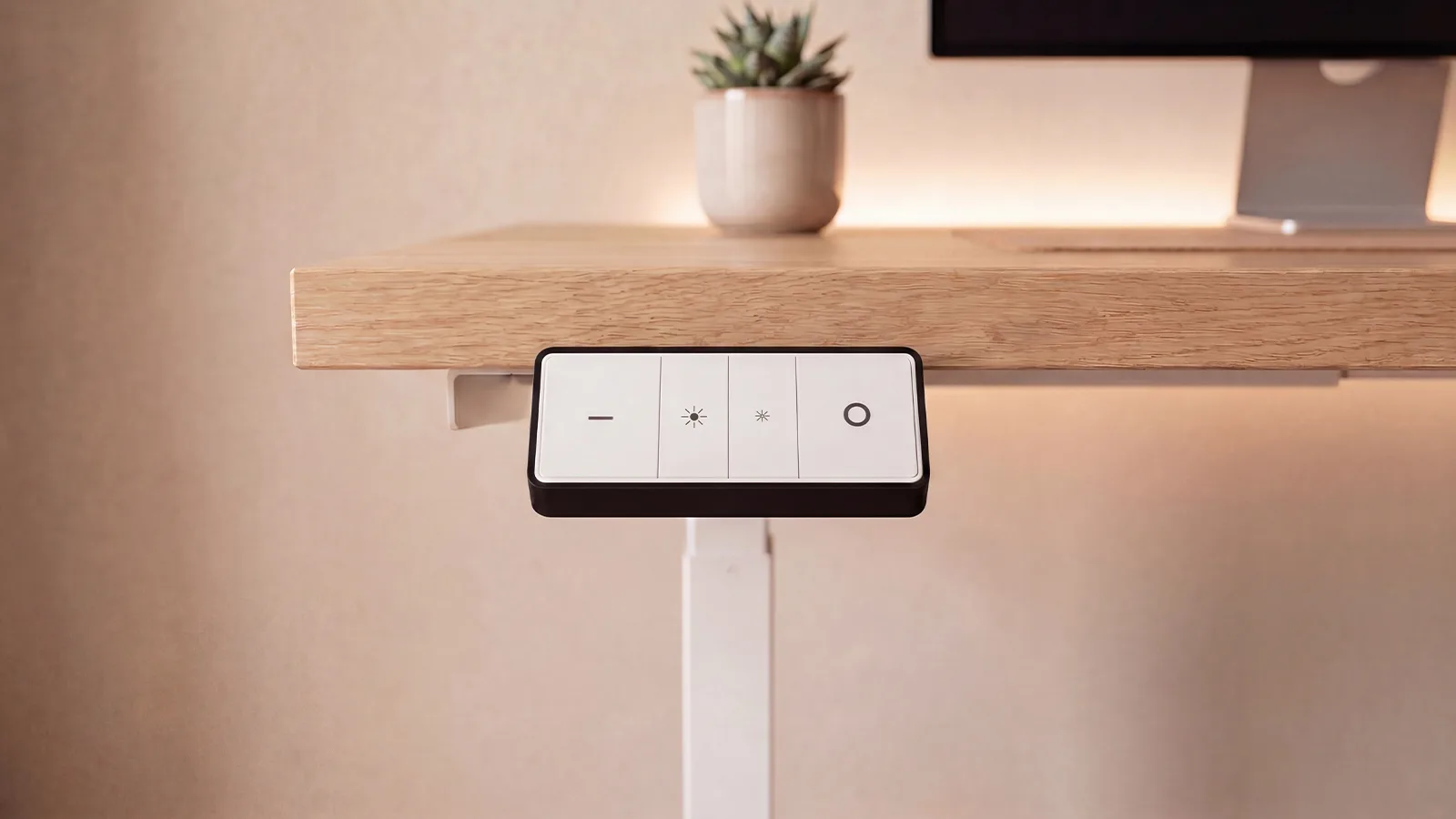
Want to neatly mount or display your Hue bulbs or the Hue Bridge? KANN's wall mounts and stands are specially designed for Philips Hue products, so everything looks tidy and well-finished.
2. Smart speakers and displays
A Google Nest or Amazon Echo is the centrepiece of many smart homes. You give voice commands, set timers, check the weather, or control other devices. A Google Nest Mini is ideally mounted at around 1.5 to 1.7 metres in height, so it picks up your voice clearly without being too close to the ceiling where echoes are more common.
Things to keep in mind when placing it:
-
Avoid areas near the kitchen or windows where there is a lot of background noise.
-
Place it centrally in the room for the best coverage.
-
Use a wall mount so the device isn't sitting on a table or shelf collecting dust.
KANN makes wall mounts for Google Nest speakers that sit flush against the wall and keep cables out of sight.
3. Smart thermostat
A smart thermostat such as the Google Nest Thermostat or the Tado lets you control your heating remotely. You set a schedule based on when you're home, and the system learns your habits. On average, you can save 10 to 15% on your energy bill this way.
Mount the thermostat on an interior wall, at around 1.5 metres in height, away from draughts, direct sunlight, or heat sources. These factors interfere with the temperature reading.
4. Smart security
Cameras, video doorbells, and smart locks are also part of the consumer smart home. They send notifications to your phone and let you watch a live feed. Install an outdoor camera at a height of 2.5 to 3 metres, aimed at the entry points of your home.
5. Smart plugs
The easiest upgrade is a smart plug. Connect your ordinary lamp, fan, or coffee maker to a smart plug and control it via an app or a schedule. No new device needed — just an intermediate step that makes any appliance 'smart'.
How do you connect everything together?
The power of a smart home lies in integration. Individual devices are convenient, but when they work together it truly becomes smart.
Three popular ways to connect everything:
-
Google Home – Works well with Google Nest products, Philips Hue, IKEA TRÅDFRI, and hundreds of other brands. Manage everything from one app.
-
Apple HomeKit – Ideal if you're an iPhone user. Strict security requirements, but that also makes it more reliable in terms of privacy.
-
Matter – The new open standard that ensures devices from different brands work better together, regardless of platform.
One pitfall: mixing too many different ecosystems. Choose one platform as your foundation and build around it. That way you won't need three apps to control three lights.
Common mistakes when building a smart home
-
Buying too much, too fast. Start with one category, learn how it works, and then expand.
-
Neglecting weak Wi-Fi. Smart devices need a stable connection. Invest in a mesh network if your home is large.
-
Forgetting about security. Use strong passwords for your smart home apps and accounts. Never use default login credentials.
-
Poor placement. Hue bulbs inside a cupboard, a Nest speaker behind a TV, or a thermostat in direct sunlight — these things sabotage how your devices perform.
Start small, grow smart
A smart home isn't built in a weekend. It's a system you expand step by step. Start with one room, one category, or one problem you want to solve — pressing too many switches, forgetting to turn off lights, high energy bills — and fix that. Then move on.
The most important lesson: a smart home doesn't need to be built-in to be smart. With the right products, a solid platform, and tidy mounting, you can get very far indeed.
Want to integrate your smart devices neatly into your interior? In the KANN shop you'll find 3D-printed wall mounts, stands, and covers for Philips Hue, Google Nest, and IKEA products — designed to fit flush and ready to use straight away. Visit the shop and complete your smart home.